

Dear partners in Lebanese Higher Education,
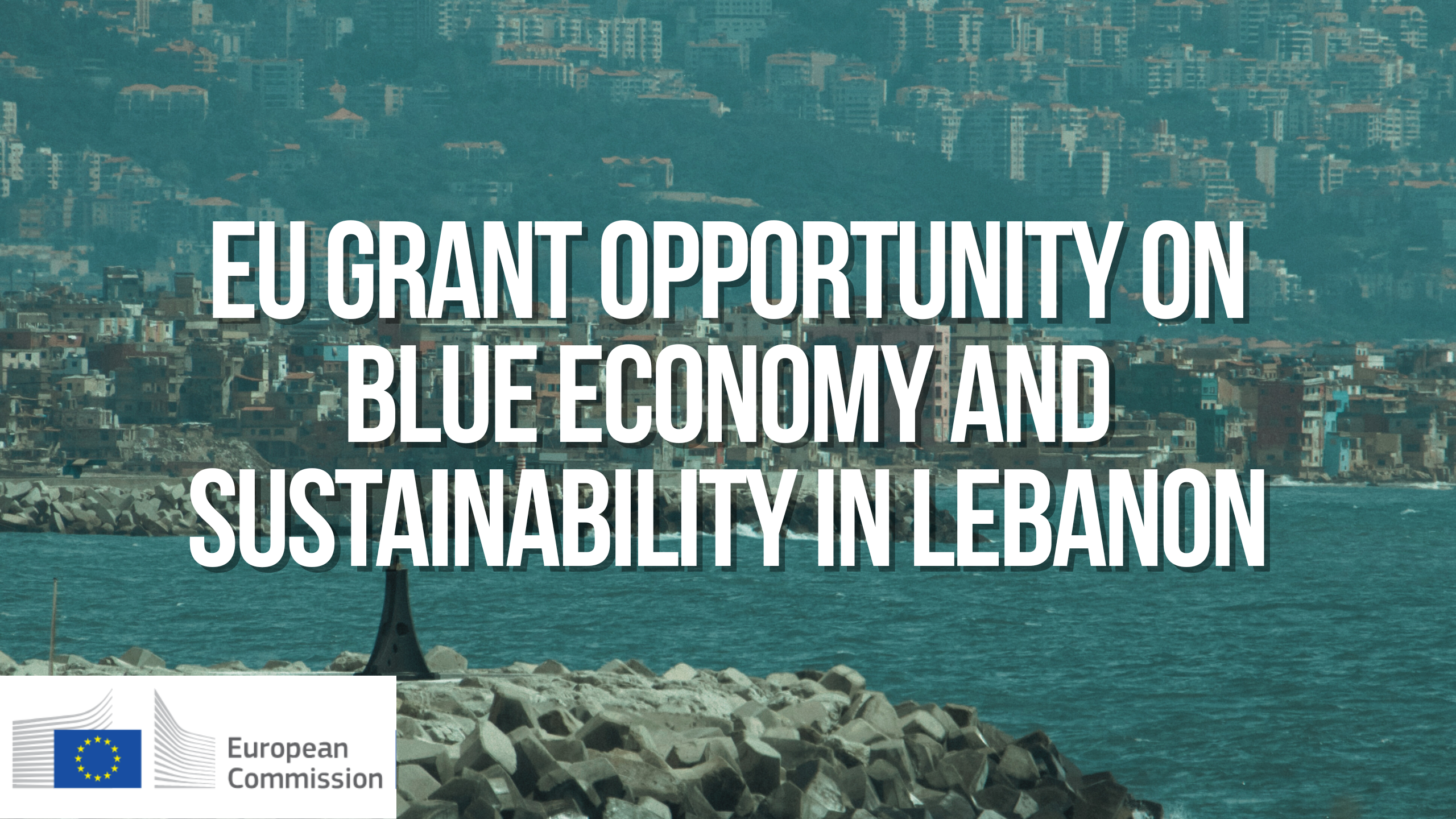
The European Commission (through the Delegation to Lebanon and EuropeAid – DG International Partnerships) has launched a strategic grant opportunity titled “Blue Economy and Green Sustainability”. This call offers significant funding open to consortium-based action grants aimed at promoting environmental sustainability, climate resilience, and sustainable blue economy development in Lebanon.
Why is this relevant for universities?
Lebanese universities and research institutions are eligible to participate as co-applicants within multi-partner consortia alongside NGOs and community actors. This represents an excellent opportunity to leverage research expertise, field testing, data collection, and innovation capacity in designing and implementing impactful solutions related to marine sustainability, fisheries enhancement, ecosystem restoration, wildfire mitigation, and sustainable land and agriculture practices.
There are two funding Lots:
- Blue Economy: Focus on sustainable fisheries, aquaculture, protection of marine biodiversity, coastal small business support, women’s participation in blue sectors.
- Green Sustainability: Emphasis on wildfire prevention, forest & land restoration, protected area management, and sustainable agricultural systems with strong community involvement.
Grant size: €1.6M to €2.5M per project; co-financing up to 95% for Lebanese applicants
Deadline : 03/04/2026
Contact : Delegation-Lebanon-PROSPECT-CFP@eeas.europa.eu
Consortium requirements
Lead applicant must be a registered NGO in the EU or Lebanon with ≥5 years of relevant experience,
At least 2–3 co-applicants, which can include universities or research centres.
Submission process
- Register the institution in PADOR,
- Prepare consortium and concept note,
- Submit concept note via EU PROSPECT portal by 3 April 2026 (16:00 Brussels time).
Next Steps for Universities
Identify relevant departments (environmental science, marine studies, agriculture, economics, gender studies).
Engage early with NGOs to form a consortium.
Align proposal with thematic priorities and demonstrate research contribution.
Ensure proper institutional registration in EU grant platforms (PADOR/PROSPECT).
Best of luck in submitting your collaborative project!